Less guessing
Name the role and task so the model starts from the right professional perspective.
The same model can produce a generic answer or a useful deliverable depending on how you frame the work. A prompt is not a throwaway question. It is the brief you give your AI.
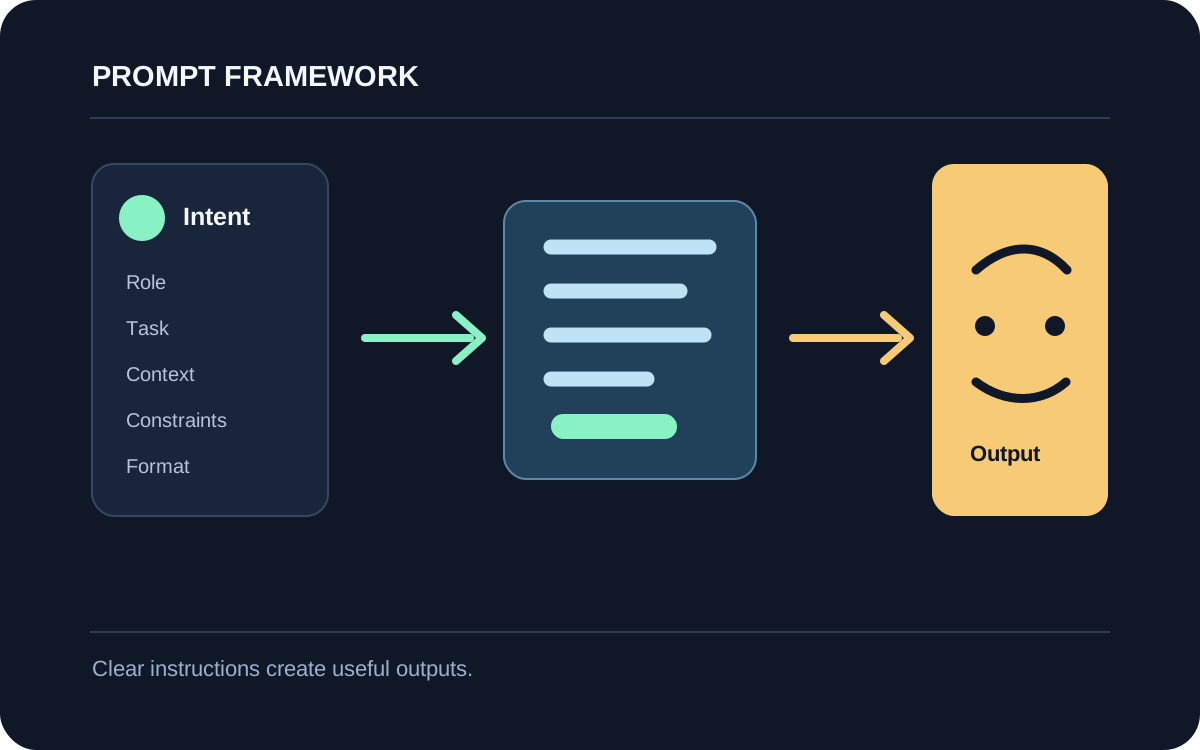
A strong prompt is not just longer. It gives the model the information it needs: a clear objective, the right context, and a definition of done.
Name the role and task so the model starts from the right professional perspective.
Set constraints and format before you generate, not after the first draft misses.
Add your product, audience, source material and channel context to get closer to the job.
When an output falls short, do not rewrite blindly. Check the structure first and find the piece the model is missing.
Whose expertise, tone and point of view should AI use?
Should it summarize, analyze, write, classify or extract?
What product, audience, assets and business details matter?
Name the length, style, must-haves and exclusions.
Show a good example when the desired bar is hard to describe.
Ask for Markdown, JSON, a script, a shot list or a table.
Clipcat offers a large collection of free prompts for TikTok commerce: product discovery, viral-video analysis, ad scripts and image generation. Find a nearby use case, replace the variables, and make it yours.
No. The template provides structure; your product, audience, assets and goal make the work specific. It gives each task a reliable starting point instead of one identical answer.
Start with the task you repeat most. For TikTok content, use viral ad prompts, video analysis and video-to-prompt workflows to close the gap between inspiration and execution.
A prompt that works is a tested method. Save versions and improve them over time so you and your team stop repeating the same trial and error.
Browse Clipcat's free prompt library and find a useful starting point for your next TikTok asset.